

Keynote Lecture: The World Ends, Masculinity Endures
Extended program Male Fantasies Lecture
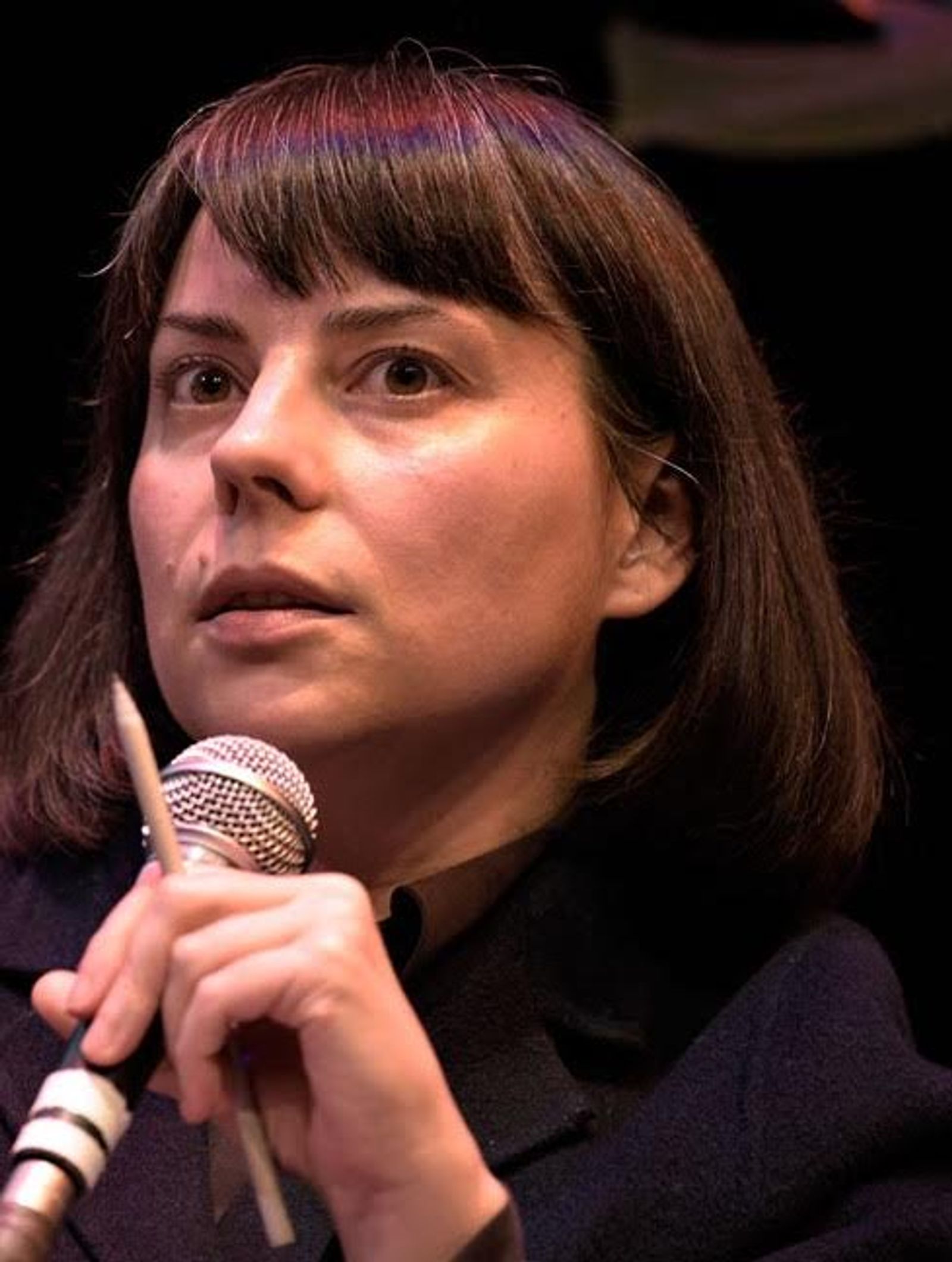
In the preparatory work for the performance Male Fantasies by Pia Maria Roll and Mohamed Mohamed, Ana Teixeira Pinto’s essay Male Fantasies: The Sequel has been a reference for Pia Maria Roll. In September, Pinto will publish a new book, The World Ends, Masculinity Endures, in which Pinto takes as a starting point the concept of “cyber-feudalism” and asks what happens when citizens are gradually rendered redundant, and which ideologies legitimize this development. In connection with this, we have a keynote lecture by Ana Teixeira Pinto. After the performance there will be a conversation between Ana Teixeira Pinto, Pia Maria Roll and Mohamed Mohamed moderated by Mike Sperlinger.
The World Ends, Masculinity Endures by Ana Teixeira Pinto
In this talk, I argue that, contrary to what proponents of terms like “cyber-feudalism” suggest, when we speak about the dawn of a new cyber-feudal era, we are not really describing the end of a specific mode of production. Rather, we are witnessing the retreat of the state’s most socially integrated facet. Cyber-feudalism, as I understand it, names the moment when the majority of the population, no longer relevant to the primary mode of accumulation, can be disposed of. This, I contend, is what underlies the ongoing assault on political and civil rights: without incentives to sustain their populations as members of a political community, states will seek to suspend the rights they had previously granted, and this is the stage we are now in.
Trump’s murderous alacrity, his use of maximum brute force with a minimum of justification, violence that is technically precise yet morally illegible, open contempt for international law, and absolute impunity, are the epiphenomena of this transition. The cruelty is not the point; the cruelty is the affect. The point is to unmake citizens and govern the rightless as wards.
When states abdicate the work of sustaining populations, they leave a void—not only in material provision but in meaning. That void, I argue, must be filled by an ideology capable of naturalizing the notion that neglect is not a breakdown but a restoration of order.
If cruelty is the affect, artificial intelligence the infrastructure, and the unmaking of citizens the political project, then my central claim is this: masculinity, understood as an ideological formation, is what performs the ideological work and supplies the moral grammar for this transition.
Taken together, cruelty as affect, masculinity as grammar, the unmaking of citizens as project, and artificial intelligence as infrastructure constitute the ideological and material apparatus of an emerging new mode of governance, and it is these coordinates that this talk maps out.
● Ana Teixeira Pinto is an author and cultural theorist. She is a professor of art theory and digital cultures at HGB Leipzig and editor for Sternberg Press’s book series On the Antipolitical. Her texts have been published in publications such as Third Text, Afterall, e-flux journal, Hyperallergic, Ibraaz, artforum, and Berlin Review. She co-organized HKW Berlin’s conference and podcast series The White West, and co-edited the subsequent publication Fascism, Unreason and the Paradox of Modernity (Sternberg Press/MIT).
The lecture will take place in English.